Съобщение

Collapse
No announcement yet.

Виетнам

Collapse
This is a sticky topic.
X
X
 
  • Filter
  • Време
  • Show
new posts

  • piston
    replied

    Първата бойна загуба на Б-52


    Това е запис на първата бойна загуба на B-52. B-52D S/N: 55-0110, позивна „Olive 2“, излитащ от U-Tapao RTAFB е ударен над Северен Виетнам от ракета повърхност-въздух (SAM) SA-2 "Guideline" близо до Вин, Северен Виетнам на 22 ноември 1972 г.

    (Olive 2 B52D 11-22-72 U-Tapao SA2 damage at Vinh. Crashed near NKP. Lost 4 engines on one side. 6 crewmen bailed out/recovered. No. 55-0110.
    P- N.J. Ostozny; C/P- Tony Foley; RN- Bud Rech; N- Bob Estes; EWO- Larry Stephens; G- Ronald W. Sellers. (1st combat loss of a B52 due to enemy action)


    Тъй като летяхме на голяма надморска височина, имахме коридори от диполни отражатели и самолет за РЕБ на Tiny Tim (EB-66), за да ни предпази от атака на СА-75.


    Снимките са от Olive 3 (B-52D S/N: 56-0669) и неговата камера O-32, разположена на дисплея за топографско сравнение (TOPOCOMP) на радарния навигатор. Има седем снимки (кадри: 3254-3260), които са само 30 секунди от мисия Arc Light. Те започват с разпръскване на диполи от Olive 2 , тъй като техният EWО (Electronic Warfare officer) знае, че са обстреляни от ЗРК (засекъл е командите за насочване на ракетара).
    От дясната страна има коридор от разпръснати диполни отражатели, които да прикрият Б-52 от вражеските радари.
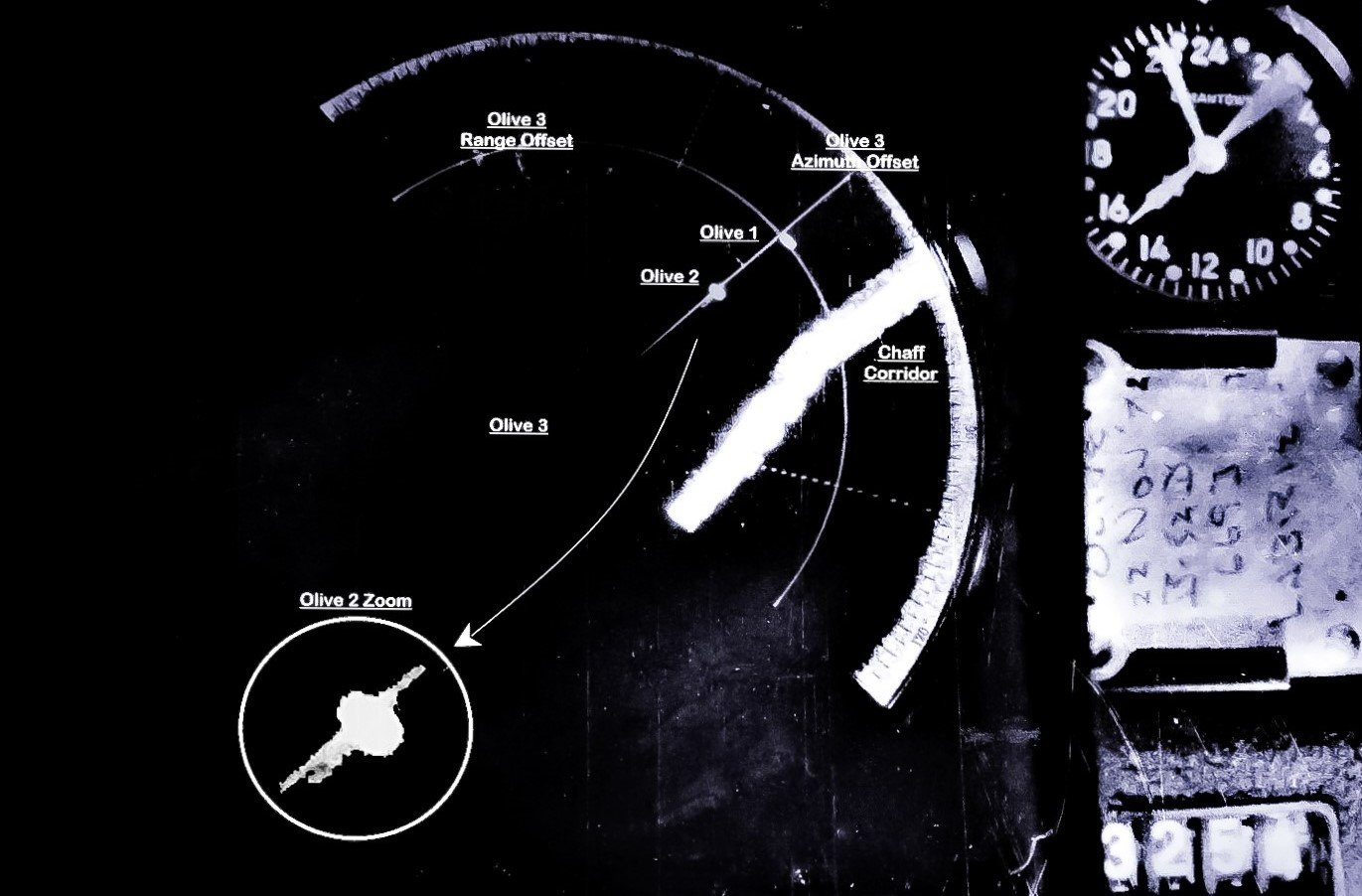


    Втората снимка показва ЗУР, детониращ до Olive 2, докато Olive 1 е в десен вираж след като е извършил бомбопускането..


    Снимките продължават с Olive 2, който продължава направо, докато екипажът се опитва да си върне контрола над повредения си самолет, докато Olive 3 вече навлиза в зоната с отломки от детонацията на ЗУР, поразила Olive 2.

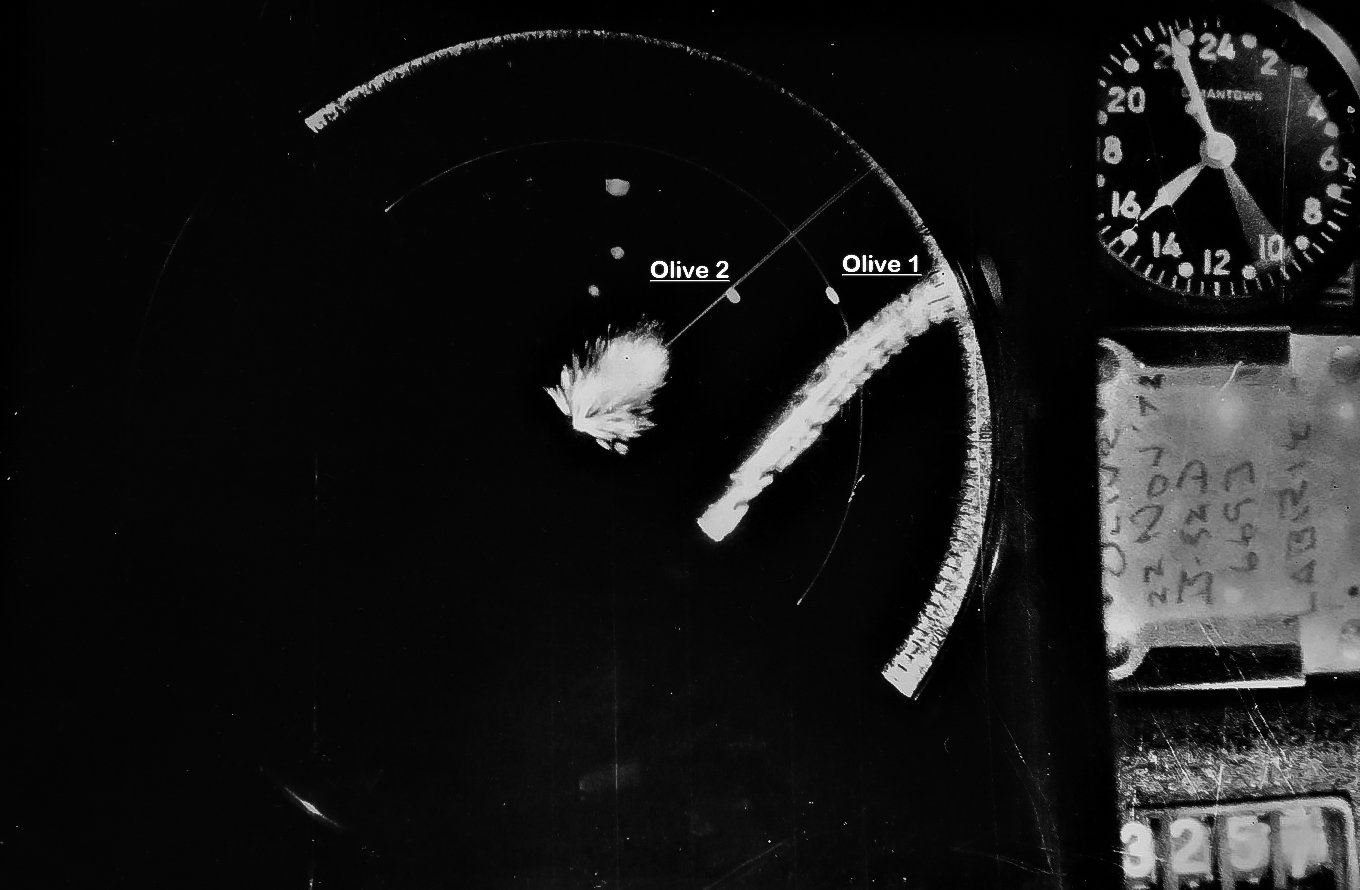


    На последната снимка виждате как Olive 1 излиза от коридора с диполни отражатели, докато сериозно повредената Olive 2 продължава направо, а Olive 3 започва десен вираж след бомбопускането.
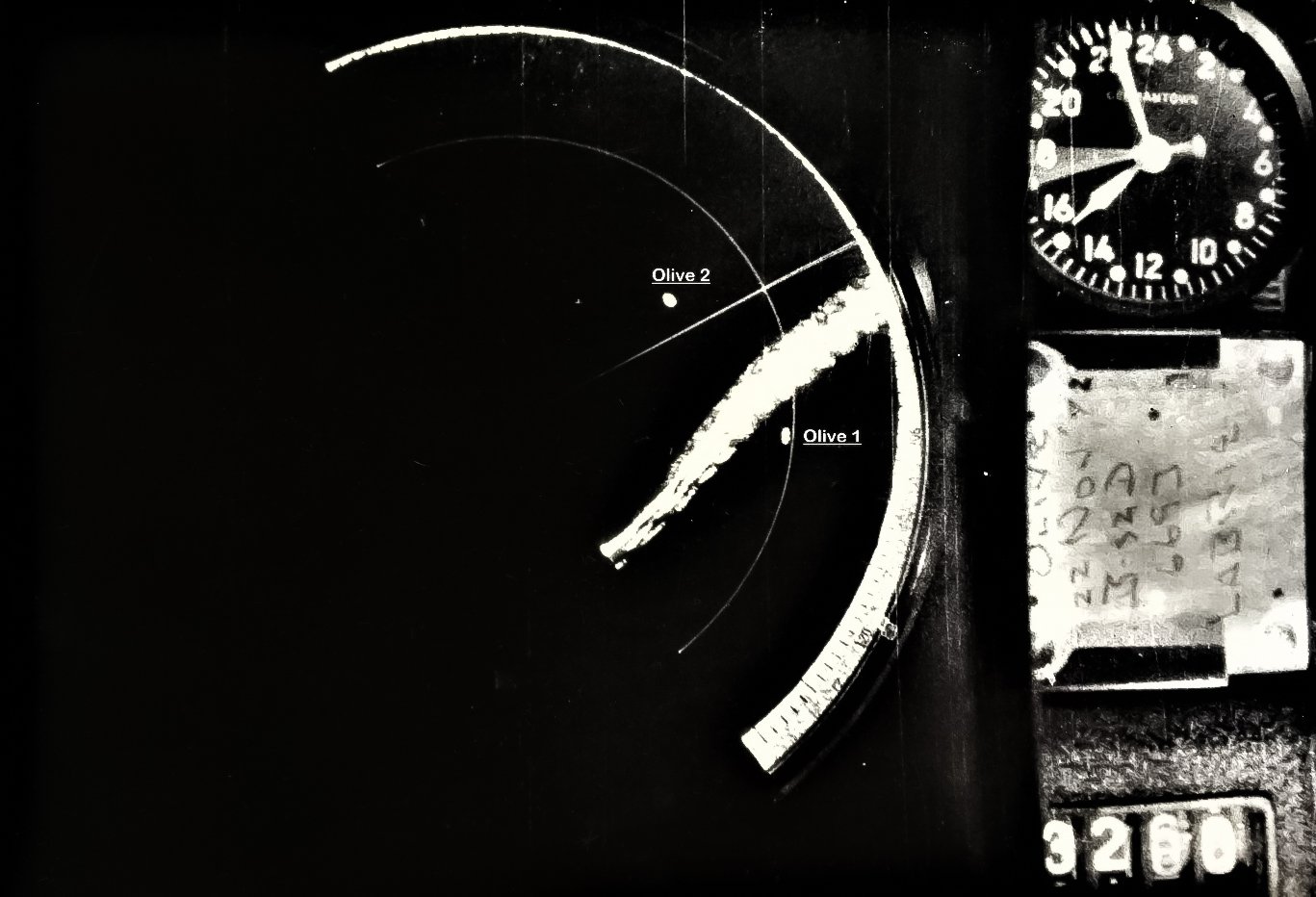


    Пoраженията по Olive 2 са загуба н херметизация, спукани резервоари за гориво, пожар в четирите двигателя от едната страна. Екипажът на Olive 2 си възвърна контрола над самолета и се добира до Тайланд, където катапултира. Всички са успешноо спасени от хеликоптер HH-53 "Jolly Green Giant". Техният самолет B-52 се разби в джунглата в тайландския район Pla-Pak, който е на 15 мили югозападно от Nakhon Phanom Thailand.

    П.С. Обичайният съпорт за тези мисии - част РЕБ


    Leave a comment:


  • piston
    replied
    Справка: С 1965 по 1972 год во Вьетнам было поставлено 95 ЗРК СА-75 «Двина» и 7658 ракет. При подведении итогов
    командование ВНА сообщило, что за войну ушло в расход, плюс боевые потери и неисправности – 6806 ракет. Боеготовых комплексов осталось 39, остальные – боевые потери и неисправности.

    г. Москва, 2003 г.

    Воробьев Марк Иванович, генерал-лейтенант.
    Родился 29.01.1921 г. в Ульяновской области. В 1941 г. окончил Чкаловское училище зенитной артиллерии. На фронте с июня 1941 по май 1945 гг. – командир огневого взвода, заместитель командира батареи, командир батареи, начальник штаба отдельного дивизиона (261 ОЗАД РГК), зам. командира армейского зенитно-артиллеристского полка (186 АЗ АП, 19 армия).
    В 1952 г. окончил Артиллеристскую радиотехническую академию в г. Харькове. Службу продолжал в Московском округе ПВО на должностях командира зенитного ракетного полка, главного инженера, заместителя командира корпуса, командира корпуса ПВО Особого назначения.
    С 1963 по 1977 гг. - начальник 1-го управления зенитного ракетного вооружения 4-го Главного управления Министерства обороны СССР. Неоднократно бывал в служебных командировках во Вьетнаме.
    С 1977 по 1979 гг. Старший Группы советских военных специалистов во Вьетнаме.
    Награжден орденами «Ленина», «Отечественной войны» I и II ст., «Красной Звезды», «Трудового Красного Знамени» медалями «За боевые заслуги», «За оборону Советского Заполярья», «За победу над Германией», вьетнамскими орденом «Дружбы» и медалью.
    Умер 07.01.2007 г., похоронен в Москве.

    Интересното е, че има и други данни за доставените ЗРК, а именно:

    ВЬЕТНАМ

    82 ЗРК СА-75М "Двина"
    21 ТДН СА-75М
    8055 ракет В-750

    Leave a comment:


  • piston
    replied
    NightPirate написа Виж мнение
    2. Советский боевой расчет кабины У-ЗРК С-75 — участники первого противовоздушного боя в небе Вьетнама 24 июля 1965 г.
    Слева-направо: мл.сержант П.Залипский, ефрейтор В.Мальга, ст.лейтенант В.Константинов, ефрейтор В.Патушов.

    Руснаците твърдят за 3 свалени самолета, докато американците - за 1 свален и три повредени.... (във видеото след 3:15)...


    Click image for larger version

Name:	24071965.JPG
Views:	1
Size:	102.5 КБ
ID:	555753


    Last edited by piston; 29-11-2020, 22:02.

    Leave a comment:


  • NightPirate
    replied
    Първите съветски специалести по ПВО във Виетнам

    6 июля 1965 г. было принято специальное Постановление Совета Министров СССР ¹ 525-200 об оказании всесторонней военной помощи ДРВ[2]. В состав созданной ранее Группы советских военных специалистов (ГСВС) были включены представители Войск ПВО страны и ВВС. Группой последовательно руководили генералы Г.Белов (1965-1967 гг.), В.Абрамов (1967-1969 гг.), Б.Стольников (1968-1970 гг.), Н.Максименко (1970-1972 гг.) и А.Хюпенен (1972-1975 гг.)[3]. Ранее, в 1964 г., в свет вышел приказ Министра обороны СССР ¹00135 по отбору военных специалистов за границу. Среди первых в апреле следующего года в Северный Вьетнам прибыла группа СВС ПВО и ВВС (около 100 человек) во главе с полковником A.M. Дзыза[4]. Формирование группы проходило на базе Московского и Бакинского округов ПВО.

    Перед группой полковника А.М.Дзыза были поставлены конкретные задачи — в кратчайший срок подготовить и ввести в действие первые два зенитных ракетных полка ВНА, имевшими на вооружении зенитные ракетные комплексы (ЗРК) СА-75М «Двина». Недалеко от Ханоя было организовано два учебных центра: «Московский» — 1-й (центр), готовил 236-й зрп, «Бакинский» — 2-й, формировал 238-й зрп.
    23 июля 1965 г. на боевое дежурство заступил первый зенитный ракетный полк ВНА (¹ 236, командир — полковник М.Н.Цыганков). В этот день самолет радиоэлектронной разведки RB-66C зафиксировал первое включение радиолокатора СА-75М. На следующий день дивизионы (63-й и 64-й) полка под командованием подполковника Б.С. Можаева и майора Ф.П. Ильиных в районе вьетнамской столицы уничтожили 3 тактических истребителя США F-4C «Фантом» путем пуска 4 ракет типа В-750В.

    1. Зенитный ракетный учебный центр во Вьетнаме, 1965 г.
    2. Советский боевой расчет кабины У-ЗРК С-75 — участники первого противовоздушного боя в небе Вьетнама 24 июля 1965 г.
    Слева-направо: мл.сержант П.Залипский, ефрейтор В.Мальга, ст.лейтенант В.Константинов, ефрейтор В.Патушов.

    Таблица результатов боевой работы стреляющих 238 -го зрп за период с 20 сентября 1965 г. по 17 апреля 1966 г.
    ¹ п/п
    Звание, Ф.И.О. стреляющего Число боев Число сбитых целей Общий расход ракет Расход ракет на одну цель Число промахов
    1 Майор Терещенко А.Г. 11 10 9 0,9 —
    2 Майор Рыжих Г.С. 9 8 10/2 1,25-1,5 —
    3 Инж.-к-н Богданов Ю.П. 10 8 13 1,62 —
    4 П/п-к Борисов М.Н. 7 5 6/2 1,2-1,6 1
    5 П/п-к Лякишев И.А. 8 5 7/2 1,4-1,8 1
    6 Инж.-к-н Петров Ю.К. 8 5 15 3 4
    7 Ст. л-т Тихомиров B.C. 6 5 5 1 —
    8 Инж.-к-н Пименов А.А. 2 2 4 2 —
    ИТОГО 61 48 69/6 1,47-1,6 6

    Архив Главного штаба Войск ПВО (до 1998 г.). Д. 20/3. Л. 2. [↩]Источник
    Attached Files

    Leave a comment:


  • piston
    replied
    piston написа Виж мнение
    Първоначално публикувано във фениксфорума, дано не сте против...


    ...........
    11 минути по-късно CHARCOAL 01, a B-52G, tail number 580201 (означен като цел 671) е ударен от две ракети, изстреляни от 59-и батальон на 261-и полк. Трима от екипажа оцеляват, пилота, помощник пилота и стрелеца загиват.


    следва...
    Снимка от разузнавателен дрон Ryan 147 на останките на Б-52, вероятно гореспоменатият CHARCOAL...

    Click image for larger version

Name:	1400m se phuc yen.JPG
Views:	1
Size:	156.7 КБ
ID:	555528

    Leave a comment:


  • piston
    replied
    Click image for larger version

Name:	2_7_1293264491_34_dienbienphu trenkhong (16).jpg
Views:	1
Size:	209.5 КБ
ID:	555498

    Благодарение на не особено добрите отношения между Китай и СССР, Северен Виетнам не получава най-доброто възможно защитно въоръжение за ПВО към 1972 (например С-125 "Нева", по-съвършенната версия на "Система-75", а именно "Волхов"; 2К12 "Куб/Квадрат"...).

    С оглед на големите загуби за Б-52 в началото на операцията, и то от добре позната и стара система като СА-75МК "Двина", ако Северен Виетнам имаха по-добри системи, вероятно ходът на операцията щеше да бъде съвсем друг, дори ми се струва, че Никсън можеше и да я прекрати....

    Leave a comment:


  • piston
    replied
    Преди да преминем към още гледни точки за битката, ето малко видео:

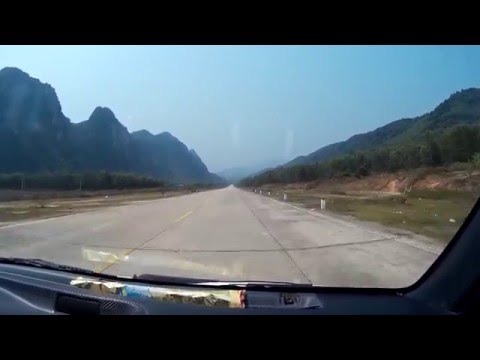
    Част от този път е всъщност тайното летище Гат, от което действат МиГ-17:


    Видео от поразеният Higbee


    piston post_id=127894 time=1558726262 user_id=107 написа
    Така, продължаваме с мнението на Larry Rouse - d state my bona fides, I am a retired Senior Chief Electronics Warfare Technician със 20 годишна служба във флота на САЩ (1980-2000). В началото на кариерата си той работи с WLR-1C/G, с каквато е оборудван и Sterett... Ето и неговото мнение във връзка с това какво се е случило и как е изглеждало за екипа, работещ с електронните сензори на кораба...
    1. WLR-1C/G работи напълно неавтоматично - т.е. отнема известно време на операторите да захванат и проучат сигнал, който представлява определен интерес. При добър екип цялата процедура по опознаването на даден сигнал отнема по-малко от минута.

    2. Наистина заливът на Донг Хой е обграден от хълмове, но те са навътре в сушата и нямат чак такъв затрудняващ ефект върху откриването на целите.SPG-55, бидейки радар за управление на огъня на "Териер"-ите (по-късно и на RIM-67 Standart), не може да се използва самостоятелно за откриване на цели.

    3. Проблемът със възможното "задхоризонтално откриване" на цели не се проявява толкова често в района, както твърди г-н Слейд. Отраженията на местни предмети на голяма далечина, припокриващи се с близки такива лесно се разпознават от операторите, доколото отражението не е със същата сила и контраст.

    4. "Рангоут" - честотата на сигнала, честотата на повторение на импулсите и начинът му на сканиране на пространството при него са много различни от АГСН на П-15 (SS-N-2). Не е възможно да се объркат двата сигнала. "Рангоут" има кръгово сканиране при търсене и неподвижна диаграма при съпровождане на целта, докато П-15 сканира пространството по друг начин - коническо сканиране:


    Всички тези особености са лесно забележими за операторите. Обичайно, след промяна в режима на работа на "Рангоут" (от търсене на захват), операторите биха търсили за сигнала на П-15, т.е. твърдението, че след засичането на "ветрикална сепарация" на наводната цел сигналът на "Рангоут" е изчезнал, означава, че операторите са се "върнали" в честотата на "Рангоут" след като са търсили сигнала от АРЛГСН на П-15... Изстрелването на контрамерки от виетнамският ракетен/торпеден катер би могло да обясни тази видеосепарация. [highlight=yellow](както каза @Sea Dog , такива "екстри" едва ли са били налични на "Комар"-те! - бел. моя)[/highlight]

    5. Относно "Териер"-ите - г-н Слейд твърди, че те са се самоунищожили, зашото не са открили цел. Това, което може да се каже със сигурност е, че НЯМА КАК да се изстреля "Териер", без да има захваната цел, доколкото ракетата е с ПРЛГСН, която трябва да приема сигнала, отразен от целта. Ако допуснем, че захватът е бил по контрамерките, то как да обясним радарните сигнали, които WLR-1C/G е засякъл?
    Лично моето мнение е, че вероятно се касае за още един МиГ-17П, който е атакувал точно в момента, когато катерите започват да се оттеглят. SPS-49 засича "вертикална сепарация" и предизвиква промяна на режима на радара за управление на ЗРК "Териер" от режим захват на наводна цел към въздушна такава. "МиГ"-ът от своя страна се опитва да засече целите с радара си, с идеята да излезе от облаците над тях (което много не кореспондира с идеята за "топмачтово" бомбардиране). Вероятно неговият радар е засечен от WLR-1 и погрешно идентифициран като сигнал от П-15.. SPG-55 е захванал МиГ-а и две ракети за изстреляни. Излъчването от радара на целта изчезва...

    *** Доп. информация:

    USS STERETT (CG 31), през 1972, е "mod 4" кораб, т.е има монтирана апаратура за синхронизиране AN/SPA-42A, която не позволява на различните радари на кораба (AN/SPG-55B; AN/SPS-10 и т.н.) да си създават взаимни смущения

    AN/SPG-55B има три режима на работа - Кратък импулс, дълъг импулс и "тесен" импулс. Най-общо първият режим е предпочитан, защото при него честотният спектър на приемника е най- малък, т.е. поема най-малко шум.

    Радарът притежава възможност за борба с проблема с целита, които се появяват на по-близко разстояние, отколкото са реално. Обичайно радарът работи в такъв режим.

    (цели, които се намират на по-голяма дистанция на индикаторите на С-75М3 "Волхов". Ляво - без режим селекция на движещите се цели, дясно - със включен режим)


    Евентуални "лъжливи цели" биха възникнали ако някаква част от оборудването на кораба не е било изправно (синхронизатор, SPG-55 радара и т.н.)
    Last edited by piston; 17-03-2020, 18:04.

    Leave a comment:


  • piston
    replied
    (продължение от предният пост)..

    забелязана индикация за цел тип "Т1" (т.е. П-15) но без да е ясно дали индикацията е в резултат на засечена емисия от АРЛГСН на ракетата, или на РЛС "Рангоут", използвана за първоначално откриване на целите.


    Обичайно РЛС "Рангоут" трябва да направи няколко засечки на целта, след което системата за управление на огъня изчислява скоростта, азимута и предварението по целта, като тази информация се зарежда в автопилота на П-15. За да се случи това, ракетният катер трябва да се движи праволинейно и с определена скорост за известно време.

    След пуск, ракетата лети известно време по зададеният курс, след което АРЛГСН се активира и започва търсене на целта (обичайно на 6 м. мили от целта, според автора). Това означава, че за да може Sterett да получи сигнал от АРЛГСН на П-15, то тя би трябвало да е на максимум около 6 мили от него. Според доклада, обаче, никаква ракета не е забелязана, а ЗУР изчезват в облаците (т.е. целта е на по-голяма височина, отколкото летящата на максимум 300 метра П-15) и се взривяват в далечината.

    Все пак Sterett недвусмислено е засякъл радарен сигнал и то от посока, където има само вражески средства - какво ли би могло да бъде това?
    Операторите на WLR-1 са напълно способни да определят дали това е сигнала на РЛС "Рангоут", въпросът е какво управлява тя - Торпеден катер Проект 183, Ракетен катер Проект 183Р или 130 мм брегова батарея.

    Най-вероятно екипът отговарящ за електронното разузнаване на Sterett е засякъл работещ "Рангоут". Вероятно радарът е сменил честотата на повторение на импулсите, с цел измерване на параметрите на движение на Sterett, което е довело до "изместване" позицията на излъчването на радара на екрана на WLR, което би могло да се интерпретира като пуск на ракета. Възможно е "Рангоут"-ът да е бил на някой от торпедните катери в района, които бидейки следени от радара на Sterett са започнали да го търсят на свой ред с цел да открият откъде идва заплахата, ерго засечената отделяща се цел от SPG-55 да е някаква защитна примамка ( @Sea Dog мисля, че такава възможност отсъства на тези съдове ?), т.е. ЗУР са изстреляни по примамка и след като не удрят нищо, се самоликвидират.

    Leave a comment:


  • piston
    replied


    Sterett's fire control radar operators had locked onto several of the surface tracks in CBT mode (Continuous Boat Track). As they were observing one of the tracks, they detected vertical video separation. The radar automatically maintained its lock onto the video that separated from the surface target. At the same time Sterett's ECM (Electronic Counter Measures) crew in CIC (Combat Information Center) received an electronic signature of an ASCM (Anti Ship Cruise Missile) and the fire control radar associated with a missile launch. It was immediately identified as a Russian SS-N-2 Styx missile

    This was the first time a Navy ship had been attacked with a guided missile in a combat situation. The positive lock by the SPG-55 fire control radar allowed Sterett to fire a salvo of two Terrier missiles immediately following the Styx launch. If Sterett would have had to acquire the Styx normally with her air search radars, plot the course via several paints (radar sweeps) and then hand it over to the missile fire control radars, she could never have fired missiles in time to intercept the Styx missile. Bridge lookouts reported seeing Sterett's Terriers enter a cloudbank and explode. The Styx was never visually spotted. Following the detonation of our Terrier, the missile target disappeared from radar and the ECM signature signal ceased.
    Edited quote from the Sterett History on their Website
    [/quote]

    Няколко коментара от Stuart Slade:

    1. Първо - няма доказателства, че Виетнам има П-15 до 1974. Макар в доклади на разузнаването да се цитират "possible Styxx missile crates" още от 1967-1968, никакви руски източници не потвърждават подобна доставка. Няма яснота относно това дали Китай, който си съперничи със СССР за братската любов на виетнамският народ, е доставял подобно оръжие

    2. Географкото положение и особености на Донг Хой - това е залив с хълмове навътре в сушата, като климатът на целият регион способства за един интересен феномен, а именно:


    - отражение на вълните от влажната атмосфера, което им позволява да достигат и до задхоризонтални обекти. В района на тропиците подобни явления са доста чести (80% от случаите се наблюдава подобна аномалия). Това води и до вторият проблем
    - отражения от местните предмети на по-голямата дистанция, които се въприемат като такива на по-близка, или като движещи се цели. Всъщност тези особености на ситуацията биха довели до засичане на множество цели, които не са реални, или не са с наблюдаваните параметри.

    Подобни затруднения с използването на радарите на кораба правят информацията от сензорите за пасивно наблюдение на обстановката (очи, уши, оптика, системи за предупреждение от облъчване) още по-важни и всъщност - критически важни.

    По това време USS Sterett разполага със следните сензори, подпомагащи бойната работа на кораба:

    - WLR-1 ESM (Electronic Surveillance Measures) systemLINK,


    - ASMD (Anti Ship Missile Defense)


    Практически системата за разузнаване представлява въртяща се антена, която изобразява всеки получен сигнал като местоположение по правата, изобразяваща зоната на сканиране. След няколко сканирания, източниците на излъчване се визуализират като стълбчета и операторът трябва ръчно да насочи приемник към сигнала, за да почне да го анализира (честота, честота на повторение на импулса, на изменение на честотата и т.н.). Очевидно е, че процеса отнема време, което може би екипът на Sterret не е имал.

    ASMD е една от мерките, въведени във американският флот в резултат на атаката по "Ейлат". Накратко - системата е създадена да работи в унисон с радара на кораба (в случая SPG-55), да реагира и да задейства контрамерки спрямо следните основни заплахи по онова време, а именно:

    T-1 (the SSN-2 Styx), T-2 (the SSC-1 Samlet) and T-3 (the SSN-3 Shaddock)

    Разбира се, системата е настроена по това, което американските военни смятат за тези оръжия, а не техните реални параметри, които ще се окажат доста по-различни от тогава предполаганото.

    Ключовата фраза е:

    "At the same time Sterett's ECM crew in CIC received an electronic signature of an ASCM (Anti Ship Cruise Missile) and the fire control radar associated with a missile launch. It was immediately identified as a Russian SS-N-2 Styx missile."
    Според свидетели, с които авторът е разговарял, изречението описва всъщност

    (следва продължение)

    Leave a comment:


  • piston
    replied


    В следствие на атаката Higbee се отклонява на североизток от оригиналният курс за изтегляне (на изток). Докато Oklahoma City се отдалечава, Lloyd Thomas продължава да се движи към пострадалият кораб за да му помогне, като маневрира така, че да застане отдясно. В ози момент от Higbee предупреждават, че имат неизстрелян снаряд в кула 52, която сочи право в Lloyd Thomas. Следва нова маневра и Lloyd Thomas вече е отляво и се включва в гасенето на пожара с прехвърляне на хора и оборудване.

    ПРез това време северновиетнамските съдове продължават маневрите си, без да атакуват ордера. След свалянето на вторият МиГ , обаче, северновиетнамските съдове се насочват към ордера на висока скорост, вероятно в опит да проведат торпедна атака….(Всъщност на Sterett очакват, че вместо торпеда, към тях може да бъде истреляна ракета, въпреки че няма твърди доказателства за наличието на подобни оръжия в комунистите, макар още от 1968 ЦРУ да споменава в докладите си, че виетнамците може би разполагат с ПКР). Sterett захваща един от контактите си в режим Continuous Boat Track (CBT) със своя SPG-55 (радар за управление на ЗР „Териер“. След няколко секунди разчетът в бойно-информационният център на кораба засичат.нар. вертикална видеосепарация или появата на нова въздушна цел (вероятно изхвърлени диполи от целта, която е засекла радиоемисията на Sterett) и промяна курса на наводната цел в посока излизане от атаката. В момента на видеосепарацията, е засечена въздушна цел в бързо сближение на около 300 фута (100 м) със скорост над 150 м/с. Целта не е идентифицирана визуално заради ниската облачна покривка. Апаратурата за РЕБ на кораба засича сигнал, който компютърът интерпретира като радар за насочване на П-15.
    Сигналът за ракетна атака е предаден към всички в ордера, но екипажът на Higbee остава по местата си и продължава гасенето.
    Sterret захваща новата цел и извършва пуск на два броя „Териер“. Ракетите изчезват в облаците и малко по-късно се чуват две експлозии, на дистанция около 7400 ярда. В този момент изчезва и сигналът, идентифициран със захванатата цел.
    Няма яснота какво точно е обстреляно в този момент. Като най-правдоподобна версия се счита, че въздушната цел не е ПКР, а още един МиГ-17 (П), чиито радар наподобява като сигнал АГСН на П-15 (Стикс). Вероятно момента, в който е задействал радара си е съвпаднал с полета му над собствените ВМС, което е спомогнало за объркването му с ПКР
    След елиминирането и на тази заплаха, Sterett продължава с курс към Higbee и Lloyd Thomas, които се приближават в насрещен курс. На около три мили от тях и с около траверс (? @Sea Dog) от около 2000 ярда отляво и отдясно, Sterett установява контакт с две торпедни лодки, атакуващи с около 40 възела, директно отзад, на дистанция около 8 мили Sterett започва обстрел с 5-инчовата си батарея и продължава курса си за преминаване между HIgbee и Lloyd Thomas, като завива зад Higbee, за да излезе в насрещен курс срещу заплахата, като прекратява стрелба докато завива, за да не удари Higbee. Същевременно екипажът подготвя още ракети за пуск, но по време на маневрата на радарните индикатори се вижда, че двете обстреляни цели са изчезнали. Sterret продължава да ескортира другите два кораба. По-нанатъшното оттегляне минава без инциденти.
    По-късно ранениете на Higbee са прехвърлени на U.S. S. Tripoli (LPH-10) и в последствие – в the 95th EVAC в Да Нанг. Higbee пристига в Да Нанг и акостира до U.S.S. Samuel Gompers (AD-37), където получава първоначален ремонт. Макар и без оръдейната установка, корабът участва в още няколко мисии, преди да се върне в Суби бей за монтиране на нова кула.
    Oklahoma City ще участва в най-голямата операция на ВМС от ВСВ до момента - the Three Cruiser Raid (Operation Custom Tailor).
    Lloyd Thomas ще потопи торпеден катер на Северен Виетнам.
    През цялата 1972 ВМС на САЩ ще участват в едни от най-интензивните си стълкновения през цялата виетнамска кампания.

    Leave a comment:


  • piston
    replied
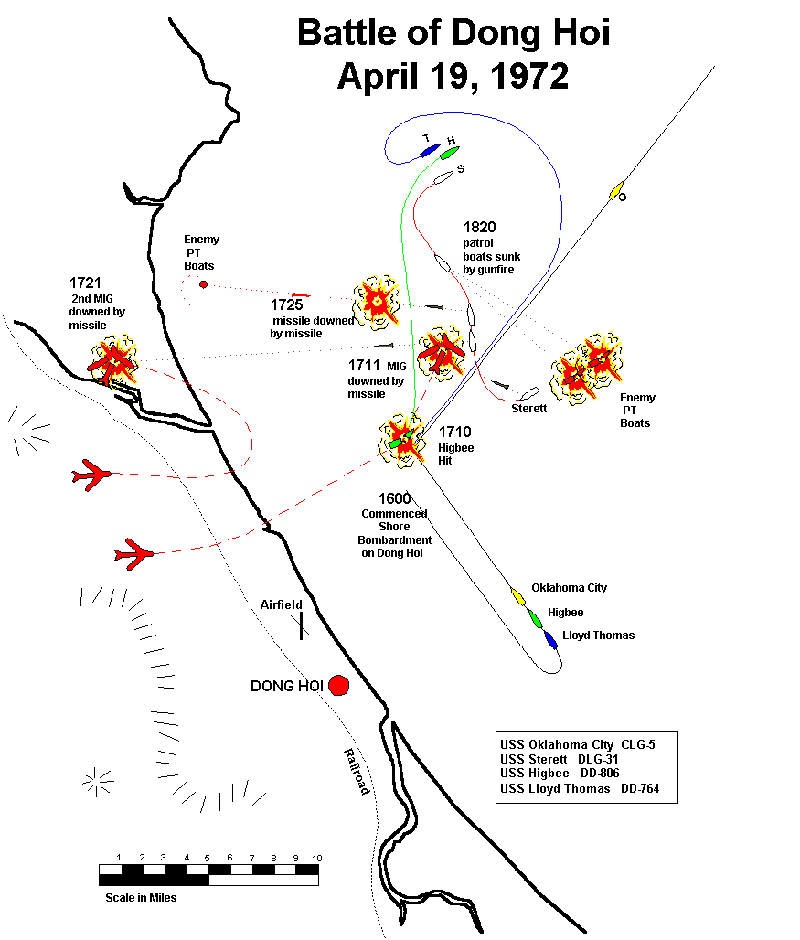
    The Battle of Dong Hoi
    РАКЕТНА АТАКА! Екипажът на U.S.S. Sterett току-що е свалил два самолета МиГ, но сега трябва да се справи с нова заплаха – атака от ПКР „Стикс“ (П-15). Друг американски кораб - U.S.S. Higbee, е обхванат от пожар и губи скорост, но най-важното за екипажа на Sterett е да отрази поредната атака. Едва ли някой от екипажа е очаквал, че ще участва в една от най-значимите морски битки във Виетнамската война.
    В началото на 1972 американското участие във войната е в своя спад – това се отнася и за ангажираните сили и средства на ВМС. Постигнатите споразумения с комунистическият Север ограничават нанасянето на удари по цели в Северен Виетнам. Всичко това се променя, когато северновиетнамските лидери, вероятно окуражени от намаляването на американското военно присъствие и неуспешната операция на южновиетнамската армия в Камбоджа, решават да предприемат мощна офанзива с цел превземането на максимална територия от Южен Виетнам с цел по-силна позиция по време на преговорите в Париж.

    Първонаалната атака на комунистите е успешна и голяма част от позициите на южновиетнамците е превзета, включително множество артилерийски позиции, което с оглед и на лошото време прави артилерийската поддръжка от страна на американският флот жизненоважна за отбраняващите се.

    На 19. Април 1972 подобна мисия е възложена и на Task Unit 77.1.2 срещу цели в района на Донг Хой.
    Битката започва когато Task Unit 77.1.2 започва артилерийски обстрел на складове и позиции на северновиетнамската армия в района на Донг Хой, с цел прекъсване на снабдяването на комунистите по крайбрежието. Групата се движи на юг в линия, като водач е флагманът на 7 флот - U.S.S. Oklahoma (CLG-5), следван на 2000 ярда от U.S.S. Higbee (DD-806) и след него - U.S.S. Lloyd Thomas (DD-764). Групировката се движи на 5 мили паралелно на брега с около 25 възела. U.S.S. Sterett (DLG-31) е на охраняваща позиция на 12 мили от брега, маневрирайки с около 5 възела, така че ПВО батареята й да бъде с открит сектор на стрелба, в случай на нужда. Освен това Sterett подсигурява със своя хеликоптер коректировка на артилерията на групата, която ннася удари по целите.
    Точно в 16.00 групата започва да обстрелва брега и скоро след това Sterett засича и идентифицира два самолета, летящи на 3000 фута в района на Dong Hoi.

    В битката се включват и бреговите батареи на северновиетнамците. УДарната група на ВМС започва да води контрабатарейна стрелба по разкритите цели, като същевременно не прекъсва обстрела по осовните си цели. Северовиетнамската артилерия няколко пъти успява да хване на „вилка“ американските кораби, като използва и снаряди със закъснително действие, които детонират около и над корабите, като причиняват леки повреди по антенната надстройка на флагмана.
    Американската група обръща на север за втора атака, под продължаващ обстрел от брега. В този момент екипажите докладват до 17 (!) надводни контакта, които се движат на северозапад от зоната за стрелба, близо до брега. Sterett започва да ги следи.

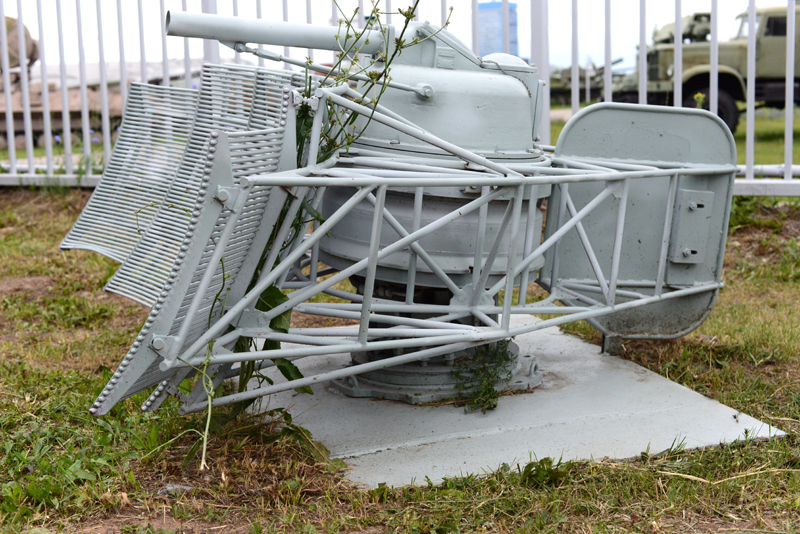
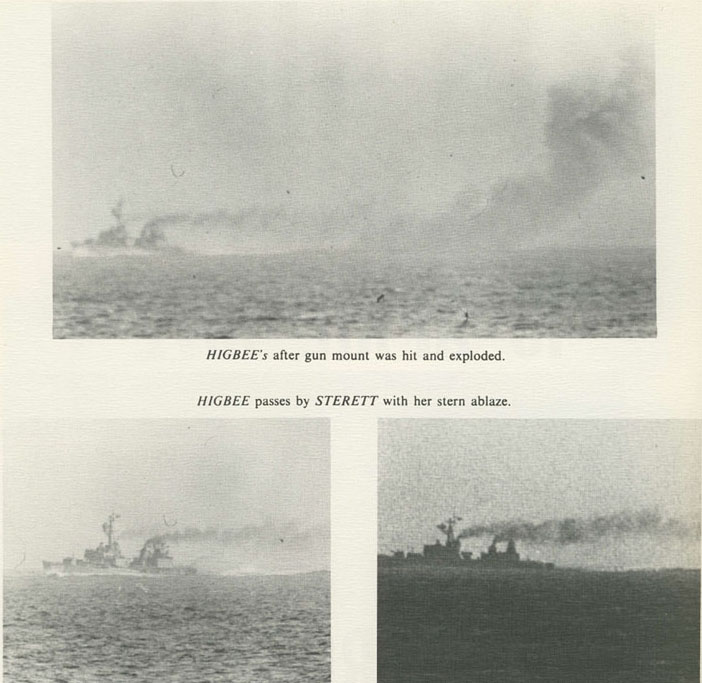
    След като групата приключва със втората си атака, корабите взимат курс на изток, като продължават да раменят стрелба с северовиетнамскат артилерия на брега. В една от оръдейните кули на Higbee (No. 52 gun mount) се получава засечка със зареден снаряд, който има опасност да се взриви от нагорещеният ствол на оръдието, в което е зареден. Разчетът е евакуиран и екипажът започва да облива и да пълни оръдието с вода, за да предотврати експлозията. Хората, в сектора под ордейната кула, обаче, не са предупредени и не напускат зоната.

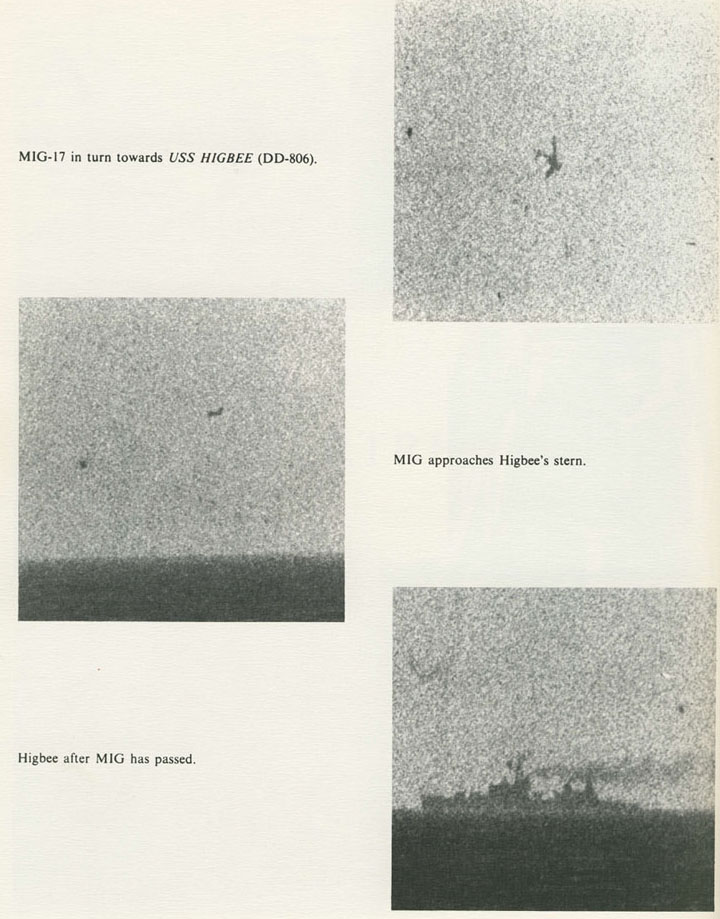
    Докато на Higbee се борят с проблема, един от виетнамските МиГ-ове излиза над морето и се нсочва към групировката на ПМВ над водата. Капитанът на Higbee заповядва увеличаване на скоростта, но не успява да обстрелят приближаващият МиГ, който атакува от страна на старборда, кабрира и хвърля 250 кг. Бомба (според очевидци хвърля две), която минава между ASROC установката и задният комин и пада в морето от лявата страна.

    МиГ-17 продължава виража си и се насочва за втора атака по кораба. Този път Higbee успява да отговори със стрелба от 12.7 мм картеница на сигналният мостик. Higbee се мъчи да мневрира за стрелба с оръдейните кули, но е твърде бавен. Sterett се опитва да направи пуск на зенитна ракета, но в бойният информационен център на кораба се чува вик “Misfire! Misfire! Initiating misfire procedures!”
    Докато на Sterett се борят с проблема, МиГ-17 захожда отново и хвърля втора бомба (или трета). Офицерът на вахта успява да извика “Brace for impact!”

    Моряците под кула 52 все още си нямат и представа нито за проблемният боеприпас над тях, нито за това, че корабът е подложен на атака от въздуха. Бомбата пробива палубата точно до оръдейната установка и експоадира срещу горното поддържащо отделение на установката. Един от хората там - Billy Springs, описва момента:

    „Когато ни удариха, всичко сякаш започна да се случва на забавен кадър, и няколкото минути, в които бяхме заклещени в помещението, ни се сториха вечност. Първо видях огненото кълбо, което идваше към мен, после чух експлозията, а накрая почувствах ударната вълна – толкова отчетливо, сякаш ги деляха минути, а не части от секундата. Експлозията измести въртящата се установка, в която подавахме снарядите и барута и тя блокира изхода. Опитах се да се изкатеря в оръдейната установка и тогава забелязах, че лявата ми ръка е натрошена. Рик Роуи беше срязан от рамо до рамо и също не можеше да се катери. Косата на Филип гореше и ние с Рик го удряхме по главата за да го угасим. Попадението беше предизвикало пожар и последваха вторични експлозии, чиято ударна вълна разцепи оръдейната установка и изби покрива й. Отвориха се и други отвори, през които започна евакуация...
    Billy Springs губи съзнание в бръснарницата, която става пункт за първа помощ.

    В машинното новината за атаката достига точно когато моряците чувстват как кораба маневрира, още не разбрали какво точно става се чуват две експлозии и трясък.... Светлините угасват и от вентилацията навлиза дим. Дизелите заработват и захранването е възстановено, но екипажа вижда, че налягането на парата пада и че губят скорост. Оказва се, че бомбата е спукала част от горивните резервоари и в тях попада морска вода.Управлението на кораба също е засегнато и той се отклонява от курса.

    Триумфиращият МиГ-17 завива на 180 градуса и се отправя към брега. Sterett най-сетне успява да изстреля един „Териер“ – който не влиза в управление. LCDR Mike Cornforth – офицерът по въоръжението напуска мостика и влиза в центъра за управление на въоръжението, крещейки “You missed! Shoot again!”.
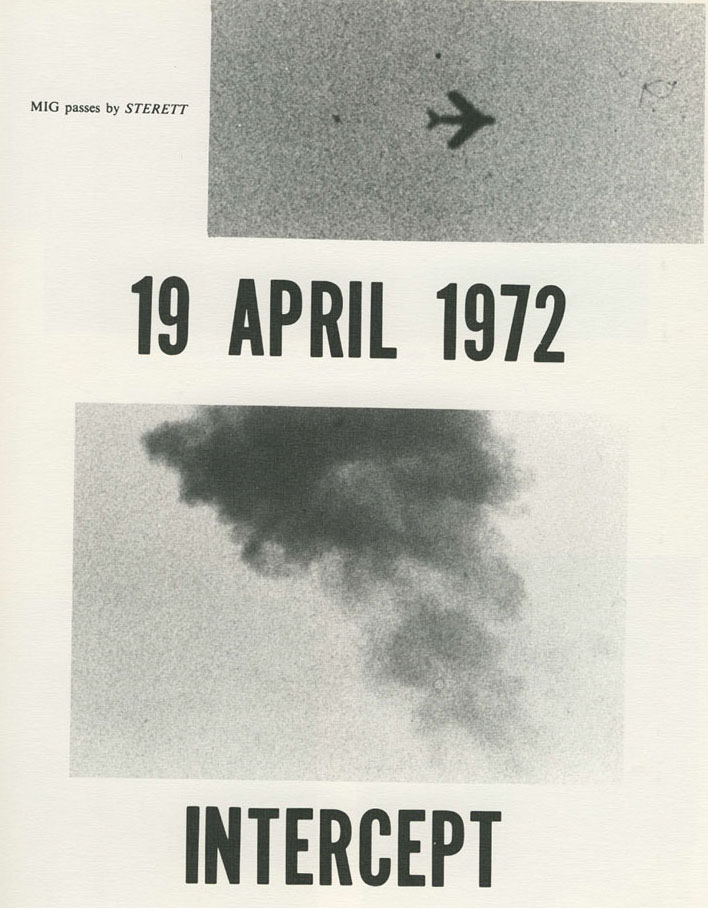
    „Седемнадесетката“ вече е на около 100 метра височина и 9500 ярда, все още под минималната далечина на обстрел на „Териер“ (?!? – принципно я дават 5000 ярда). Все още в захват Sterett изстрелва още една ракета и започва презареждане на пусковата. Както и при предишният пуск, ракетата не е в управляем полет. Този път, обаче тя улучва самолет точно в снадката на крилото с тялото. Самолетът изчезва в облак прах, дим и отломки, които се сипят в морето.... (!)
    Докато трае обстрела на първата цел, втори МиГ е засечен да се доближава към ордера. Малко след като излиза над море, е поразен първият МиГ, и вторият МиГ обръща към сушата. Sterett вече съпровожда новата цел и прави пуск на две „Теирер“-а. На екрана на радара двете ракети се „сливат“ с целта и тя изчезва от радара. USAF F-4 Phantom, докладва на кораба, че е наблюдавал попадението.

    (следва продължение...)

    Leave a comment:


  • piston
    replied
    Още един интересен и противоречив епизод на море (след инцидента в залива Тонкин, разбира се)....


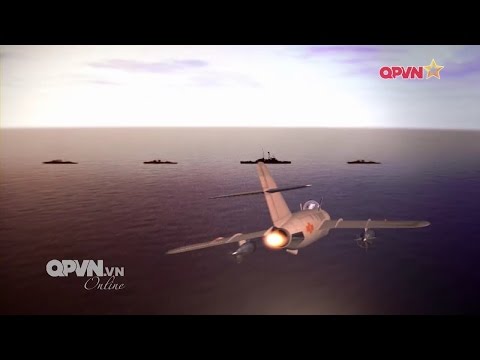
    През 1971 командването на ВВС ДРВ започва да обучава група пилоти за т.нар. "специални задачи". 10 пилота от 923 изтребително-авиационен полк (Trung Doan Khong Quan Tiem Kich 923) са подбрани и започват да се обучават за извършване на атаки по морски съдове. Обучението е провеждано от кубински (или представящ се за такъв ) съветник, представящ се с името Ернесто. Към март 1972, шестима пилоти се считат достатъчно подготвени за задачата. Паралелно с обучението на пилотите, 28 техническа бригада започва изграждането на новото летище Гат в провинция Куангбин.

    Част от подготовката е и усилването на контрола над корабодвижението в прилежащите води чрез прехвърляне на радиолокационна рота (403) в района на устието на река Nhật Lệ (която се влива в морето при град Донг Хой). 403 рота разполага с РЛС П-35.


    ...................

    В 15:45 на 18.04.1972 година двама пилоти - Ле Хонг Диеп и Та Ди от 923 ИА полк излитат със своите МиГ-17 от летище Кеп и след две междинни кацания в Гиалам и Вин се приземяват на новото летище Гат. Самолетите им бързо са замаскирани.

    AIRSTRIPS1972.JPG

    Същата вечер виетнамските РТВ водат в рамките на около час (23.00-23.50) морски цели на траверс срещу село Куангха.

    На другият ден още от сутринта пилотите Нгуен Ван Бай и командирът му - Ли Ксуан Ди заемат място в кабините на своите МиГ-17, но мъглата не им позволява да действат.

    Към 15:00 часа група от четири кораба се доближава до брега на около 15 км срещу ЛиХоа още два кораба - на 7 км км от Куанг трач (северно от Донг Хой), още три — 18 км от Лихоа. Още една групп морски цели се появява в 16.00 на 16 км от река (?) Нятли (Nhật_Lệ).

    В 16.05 е получена заповед за излитане.МиГ-17 са въоръжени с по две БЕТАБ. Първоначално двойката лети с курс към височина 280, намираща се на 10 км от брега. След достигането на височината, двойката МиГ-17 прави десен вираж. Над Лихоа пилотите забелязват дима от корабите, които водят обстрел по брега. Ли Ксуан Ди предава на КП, че наблюдава два кораба право пред себе си на разстояние 10–12 км. КП дава заповед за атака.

    Над морето водещият с ляв вираж атакува эсминеца «Хайгби» (DD-806 «Higbee»),


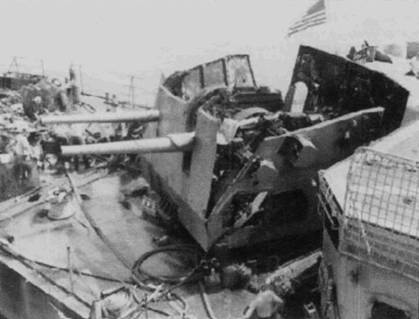
    увеличавайки скороста до 800 км/ч. На разстояние до целта около 750 м, Ли Ксуан Ди прави бомбопускане. Двете 250-кг бомби попадат в эсминеца. Ли Ксуан Ди докладва на КП, а в 16.18 неговият МиГ-17 вече е на летище Гат. При приземяването — самолетът излиза извън полосата, за щастие няма повреди и летеца няма наранявания.

    — Докато Ди атакува, Нгуен Ван Бай вижда два кораба северо-западно от устието на рекa Дин (Dinh). Според Нгуен Ван Бай те са толкова близо, че не му остава време да направи правилен заход и той прелита над целта. Бай опитва втора атака, при която на разстояние около 750 м. успява да пусне бомбите. Ли Ксуан Ди го пита дали е улучил целта, на което Бай отговаря, че не е успял да забележи попадение. Бай се приземява в 16.22 като наблюдава стълб черен дим с пламъци (явно от удареният есминец).


    Ли Ксуан Ди (слева) демонстрирует как он и Нгуен Ван Бай атаковали крейсер «Оклахома Сити» и эсминец «Хайгби» 19 апреля 1972 г. Перед летчиками модель крейсера. Сам Ди поразил двумя 250-кг бомбами эсминец. Крейсер также получил повреждения, хотя и более скромные по масштабам.


    На снимке хорошо видны последствия взрыва 250-кг авиационной бомбы, сброшенной Ли Ксуан Ди со своего МиГ-17Ф. Кормовая двухорудийная 5-дюймовая башня эсминца «Хайгби» полностью выведена из строя. Удивительно, но никто из моряков не был убит.


    Ето как протича битката, според американският флот:

    Sterett Command Reports 1972

    Накратко, освен атаката на двата МиГ-17, USS Higbee (DD-806),USS Sterett (DDG-31). USS Lloyd Thomas (DD-764) флагмана Oklahoma City обстрелват и няколко надводни цели, като дори се смята, че за първи път виетнамците изстрелват ракета "повърхност-повърхност" (вероятно тип П-15 или китайско копие).

    Като повреди, освен ударената оръдейна кула на Higbee, леки повреди има и по антените на Оклахома (от оръдейната стрелба от брега). Четирима моряци са ранени, благодарение на щастливата случайност, че в ударената оръдейна кула не е имало никой, заради дефектирал боеприпас в едно от оръдията.


    Leave a comment:


  • piston
    replied
    Едно от най-известните изстъпления на комунистическите сили срещу собственият си народ е клането в Дак Сон - планинско село близо до границата с Камбоджа.

    Селото е атакувано през нощта на 05,12,1967 с гранати и огнехвъргачки, като всички, които се опитват да избягат от подпалените си къщи са подложени на обстрел от стрелково оръжие...

    Голяма част от загиналите са намерили смъртта си в укрития, задушени или изгорени от северовиетнамските комунисти...

    Жертвите се изчисляват между 114 до 252 човека


    Съществува мнението, че акцията е отмъщение са това, че хората от Дак Сон са приютили бежанци от села под контрола на комунистически Виетнам, които явно не оценили невероятните блага на комунизма и избягали на юг.

    П.С. След мирната конференция в Женева от 1954 Виетнам е разделен на две части и над милион човека избягват в Южен Виетнам (основно католици). Явно ръководството на Севера е било крайно чувствително към този факт и е прибягвало до такива "освободителни" действия върху собствените си хора.

    Leave a comment:


  • piston
    replied
    Доста информация има относно цивилните жертви от действията на САЩ във Виетнам, но малко се знае за изстъпленията на комунистическите партизани и армията на Северен Виетнам.... Кратък списък:


    image001.jpg (94562 bytes)Viet Cong Terrorists Kill 160 In US Embassy Bombing In Saigon Wrecked Embassy Interior: This is the interior of the US Embassy in Saigon after the Viet Cong terrorist bomb exploded near the building on March 30. More than 160 Vietnamese and Americans were killed or injured in the blast. Many were passers-by or persons in shops across the street from the Embassy. President Johnson called the attack an outrage and said 'this will only reinforce the determination of the American people and government to continue to strengthen their assistance and support for the people and government of Vietnam.'

    image002.jpg (88140 bytes)Viet Cong Terrorists Use 250-Pound Bomb To Destroy Metropole Hotel
    Saigon, December 4, 1965-- US Representative David S. King of Utah, standing behind one of the many private Vietnamese vehicles destroyed when Viet Cong terrorists exploded an estimated 250-pound bomb in front of the Metropole Hotel, a US enlisted men's billet, early this morning. Talking with an unidentified US serviceman is Louis I. Freed, a staff investigator for the US House of Representatives.

    image003.jpg (68817 bytes)US Marines 'Adopt' Vietnamese Boy Injured By Land Mine
    Viet Cong Victim And Benefactor: Le Dac, a South Vietnamese boy who lost a leg in 1965 when he stepped on a Viet Cong land mine while herding cows near his home village southwest of Da Nang, enjoys a stroll with Corporal Gary Cooper of the 3rd US Marine Division. Corporal Cooper and other members of the division, stationed at Da Nang, have made arrangements for the young lad to be flown to Saigon to be fitted with an artificial leg. The Marines are also teaching Le Dac to read and write, and have started a fund for his future schooling.

    Newspaper
    Americans Killed And Wounded In Red Attacks At Pleiku
    7 U.S. servicemen were killed and 80 wounded when North Vietnamese forces launched to sneak night attacks on two U.S. compounds at Pleiku, 240 miles north of Saigon.

    image004.jpg (65484 bytes)Air Force Evacuates Refugees To Saigon Refugee Evacuation: Saigon: Flight For Freedom: Vietnamese refugees forced by Viet Cong attacks to abandon their central highlands village board an Air Force CH-3C heliocopter for a trip to a safe area near Saigon. In the wake of major battles and Viet Cong attacks, Air Force helicopter and troop transport crews move hundreds of Vietnamese to safety.

    image005.jpg (50437 bytes)Victims Of Viet Cong Midnight Raids
    Vietnamese Farmers Victims Of Viet Cong Midnight Raids - Nguyen Van Buong (shown in casket) was a 38-year-old rice farmer and the father of three children. His wife and aged father are shown standing around his casket in their thatched-roof, dirt-floored, one room home.

    image006.jpg (77831 bytes)Viet Cong Land Mine Kills 1 And Injures 20 On Civilian Bus
    On April 30, 1967, a civilian bus traveling on Highway 1, east of Trang Bang, came upon a bridge destroyed by the Viet Cong. While turning his bus around, the driver ran over a Viet Cong land mine. Twenty persons were wounded and one died later as a result of injuries.

    image007.jpg (73550 bytes)Infant Burned In Dak Son Massacre With the aid of a convalescent patient at the hospital in Song Ba, a badly burned infant is carried to temporary quarters. The Vietnamese government has promised to rebuild their home.

    image008.jpg (124007 bytes)Victims Of Dak Son Massacre Await Burial
    Bodies wrapped in available material await burial in one of the few remaining huts. These bodies were removed from a tunnel shelter.


    image009.jpg (100368 bytes) Viet Cong Attack Sam Bua In Vinh Binh Province
    Victims of a Viet Cong attack on Sam Bua hamlet, Vinh Binh Province, on July 8, 1967, sit beside their destroyed homes.


    The communist leaders of Vietnam responsible for subjecting anti-Communist Vietnamese and U.S. prisoners of war to concentration camps, brutal guards, starvation rations, decapitation, killing fields and mass graves. The facts needed to investigate and successfully prosecute Vietnamese war criminals are clearly laid out in thousands of pages of documentation and testimony on file with the U.S. government, including statements and reports received from victims, witnesses, other governments, UN agencies, international organizations and non-governmental organizations.

    The Vietnamese Communist Leaders, have a well-defined and recorded history as a black-hearted war criminal. Vietnamese Communist Party recruited young Vietnamese men and women (children included) and trained them as terrorists for terrorism acts against the civilian population of South Vietnam .


    The communist leaders responsible for the Viet Cong's official policies pertaining to the treatment of U.S. prisoners of war, policies which resulted in the deaths of nearly 40 percent of all U.S. prisoners in Viet Cong prisons.

    In the name of justice and for the sake of all the victims of Vietnamese Communist's war crimes, please ask that they (VCP) be investigated and prosecuted by the newly formed United Nations War Crimes Tribunal.

    For your information, here is a list by date of some of the war crimes members of the Vietnamese Communist Party are guilty of.


    Viet Minh gained political power in 1954 , members of the Lao Dong (Communist Party) invaded South Vietnam after the end of the French-Indochina . Vietnamese communists conceal their involvement in ordering brutal acts of terrorism.

    1957-58: VCP used the application of violence, elimination of anyone who might potentially support, or form the core of, opposition to their communist ideologies deliberate policy of exterminating possible opponents had been refined to an art, with South Vietnamese village chiefs and their families serving as primary targets for wholesale campaigns of assassination.


    The following is a partial chronological list of terrorist acts which were a part of VCP's campaign of terror against the civilian population of South Vietnam.

    Feb. 2, 1960: Terrorists sack and burn the Buddhist temple at Phuoc Thanh, Tay Ninh province. They stab to death 17-year old Phan Van Ngoc, who tries to stop them.

    April 22, 1960: Some 30 armed communists raid Thoi Long, An Xuyen province. They attempt to take away villager Cao Van Nanh, 45. Villagers protest en masse. Farmer Pham Van Bai, 56, is particularly argumentative. The communists, angered, seize him.
    This arouses the villagers who swarm toward the Viet Cong and their prisoner. The communists fire into the crowd. A 16-year old boy is shot dead.

    August 23, 1960: Two school teachers, Nguyen Khoa Ngon and Miss Nguyen Thi Thiet, are preparing lessons at home when communists arrive and force them at gun point to go to their school, Rau Ran, in Phong Dinh province. There they find two men tied to the school veranda. The communists read the death order of the two men, named Canh and Van. They are executed, presumable to intimidate the school teachers.

    September 24, 1960: An armed band sacks a school in An Lac. An Gian province. It piles seats and desks together and fires them and the school. All that remains is four bare walls.

    September 28, 1960: Father Hoang Ngoc Minh, much beloved priest of Kontum parish, is riding from Tan Canh to Kondela. A communist road block halts his car. A bullet smashes into him. The guerrillas drive bamboo spears into Father Minh's body, then one fires a submachine gun point blank, killing him. The driver Huynh Huu, his nephew, is seriously wounded.

    September 30, 1960: A band of ten armed communists kidnap farmer Truong Van Dang, 67, from Long Tri, Long An province. They take him before what they call a "people's tribunal." He is condemned to death for purchasing two hectares of rice land and ignoring communist orders to turn the land over to another farmer. After the "trial" he is shot dead in his rice field.

    December 6, 1960: Terrorists dynamite the kitchen at the Saigon Golf Club, killing a Vietnamese kitchen helper and injuring two Vietnamese cooks.

    December 1960: The GVN reports to the ICC that during the year the communists destroyed or damaged 284 bridges, burned 60 medical aid stations and, through destruction of schools, deprived some 25,000 children of schooling.

    March 22, 1961: A truck carrying 20 girls is dynamited on the Saigon-Vung Tau road. The girls are returning from Saigon where they have taken part in a Trung Sisters Day celebration. After the explosion terrorists open fire on survivors. Two of the girls are killed and ten wounded. The girls are unarmed and traveling without escort.

    May 15, 1961: Twelve Catholic nuns from La Providence order are traveling on Highway One toward Saigon. Their bus is stopped by communists who ransack their luggage. Sister Theophile protests and is shot dead on the spot. The vehicle is sprayed with bullets seriously wounding Sister Phan Thi No. The ambush takes place near Tram Van, Tay Ninh Province.

    July 26, 1961: Two Vietnamese National Assemblymen Rmah Pok and Yet Nic Bounrit, both Montagnards, are shot and killed by terrorists near Dalat. A schoolteacher, traveling with them on their visit to a Montagnard resettlement village, is also killed.

    September 20, 1961: One thousand main force communist soldiers storm Phuoc Vinh, capital of (then) Phuoc Thanh province, sac and burn government buildings, behead virtually the entire administrative staff. They hold the capital for 24 hours before withdrawing.

    October, 1961: A U.S. State Department study estimates that the communists are killing Vietnamese at rate of 1,500 per month. December 13, 1961: Father Bonnet, a French parish priest from Konkala, Kontum is killed by a terrorist while visiting parishioners at Ngok Rongei.

    December 20, 1961: S. Fuka, a Japanese engineer at the Da Nhim dam, a Japanese government war reparations project to supply electric power to Viet-Nam, is kidnapped after being stopped at a road block. His fate is never learned.

    January 1, 1962: A Vietnamese labor leader, Le Van Thieu, 63, is hacked to death by terrorists wielding machetes near Bien Hoa, in the rubber plantation on which he works.

    January 2, 1962: Two Vietnamese technicians working in the government's anti-malaria program, Pham Van Hai and Nguyen Van Thach, are killed by communists with machetes, 12 miles south of Saigon.

    February 20, 1962: Terrorists throw four hand grenades into a crowded village theater near Can Tho, killing 24 women and children. In all, 108 persons are killed or injured.

    April 8, 1962: Communists execute two wounded American prisoners of war near the village of An Chau in Central Viet-Nam. Each, hands tied, is shot in the face because he cannot keep up with the retreating captors.

    May 19, 1962: A terrorist grenade is hurled into the Aterbea restaurant in Saigon, wounding a Berlin circus manager and the cultural attache from the German Embassy.

    May 20, 1962: A bomb explodes in front of the Hung Dao Hotel, Saigon, a billet for American servicemen, injuring eight Vietnamese and three Americans who are in the street at the time.

    June 12, 1962: Communists ambush a civilian passenger bus near Le Tri, An Giang province, killing the passengers, the driver and the driver's helper, a total of five men and women.

    October 20, 1962: A teenage communist hurls a grenade into a holiday crowd in downtown Saigon, killing six persons, including two children, and injuring 38 persons.

    November 4, 1962: A terrorist hurls a grenade into an alley in Can Tho, killing one American serviceman and two Vietnamese children. A third Vietnamese child is seriously injured.

    January 25, 1963: Communists dynamite a passenger freight train near Qui Nhon, killing eight passengers and injuring 15 others. The train is carrying only rice as freight.

    March 4, 1963: Two Protestant missionaries-Elwood Forreston, an American, and Gaspart Makil, a Filipino, are shot dead at a road block between Saigon and Dalat. The Makil twin babies are shot
    and wounded.

    March 16, 1963: Terrorists hurl a grenade into a Saigon home where and American family is having dinner, killing a French businessman and wounding four other persons, on of them a woman.

    April 3, 1963: Terrorists throw two grenades into a private school near Long Xuyen, An Gian province, Killing a teacher and two other adults. Students are performing their annual variety show at the time.

    April 4, 1963: Terrorists throw grenades into an audience attending an outdoor motion picture showing in Cao Lanh village in the Mekong Delta, killing four persons and wounding 11.

    May 23, 1963: Two powerful explosions set off by terrorists on bicycles kill two Vietnamese and wound ten others in Saigon. Police believe the explosion was accidentally premature.

    September 12, 1963: Miss Vo Thi Lo, 26, a schoolteacher in An Phuoc, Kien Hoa province, is found near the village with her throat cut. She had been kidnapped three days earlier.

    October 16, 1963: Terrorists explode mines under two civilian buses in Kien Hoa and Quang Tin provinces, killing 18 Vietnamese and wounding 23.

    November 9, 1963: Three grenades are thrown in Saigon, injuring a total of 16 persons, including four children; the first is thrown in a main street, the second along the waterfront, and the third in the Chinese residential area.

    February 9, 1964: Two Americans are killed and 41 wounded, including four women and five children, when a communist bomb is set off in a sports stadium during a softball game. A second portion of the bomb fails to explode. Officials estimate that if it had, fifty persons would have died.

    February 16, 1964: Three Americans are killed and 32 injured, most of them U.S. dependents, when terrorists bomb the Kinh Do movie theater in Saigon.

    July 14, 1964: Pham Thao, chairman of the catholic Action Committee in Quang Ngai, is executed when he returns to his native village of Pho Loi, Quang Ngai province.

    October, 1964: U.S. officials in Saigon report that from January to October of 1964 the communists killed 429 Vietnamese local officials and kidnapped 482 others.

    December 24, 1964: A Christmas eve bomb explosion at the Brink officers' billet kills two Americans and injures 50 Americans and 13 Vietnamese.

    February 6, 1965: Radio Liberation announces that the communists have shot two American prisoners of war as reprisals against the Vietnamese government, which had sentenced two terrorists to death.

    February 10, 1965: Terrorists blow up an enlisted men's barracks in Qui Nhon, killing 23 Americans.

    March 30, 1965: A bomb explodes outside the American Embassy in Saigon, killing 2 Americans, 18 Vietnamese and injuring 100 Vietnamese and 45 Americans.

    June 24, 1965: Radio Liberation announces the execution of an American prisoner.

    June 25, 1965: Terrorists dynamite the My Canh restaurant in Saigon, killing 27 Vietnamese, 12 Americans, two Filipinos, one Frenchman, one German; more than 80 persons are injured.

    June 1965: Vietnamese officials report the rate of assassinations and kidnappings of rural officials has double din June over May and April; 224 officials were either killed or kidnapped.

    August 18, 1965: A bomb at the Police Directorate office in Saigon kills six and wounds 15.

    October 4, 1965: One of two planted bombs explodes at the Cong Hoa National Sports Stadium, killing eleven Vietnamese, including four children, and wounding 42 persons.

    October 5, 1965: A bomb goes off, apparently prematurely, in a taxi on a main street in downtown Saigon, killing two Vietnamese and wounding ten others.

    December 4, 1965: In Saigon a terrorist bomb kills eight persons when it explodes in front of a billet for U.S. enlisted men; 137 are injured, including 72 Americans, three New Zealanders and 62
    Vietnamese.

    December 12, 1965: Two terrorist platoons kill 23 Vietnamese canal construction workers asleep in a Buddhist Pagoda in Tan Huong, Dinh Tuong province; wound seven others.

    December 30, 1965: Saigon editor Tu Chung of the newspaper Chinh Luan is gunned down in point blank fire as he arrives home at noon for lunch. Earlier he had published the texts of threatening notes he had received from the communists.

    January 7, 1966: A Claymore mine explodes at Tan Son Nhut gate (entrance to Saigon airport), killing two persons and injuring 12.

    January 17,1966: Communists in Kien Tuong detonate a mine under a highway bus, killing 26 civilians, seven of them children. Eight persons are injured and three are listed as mission.

    January 18, 1966: Communists mine a bus in Kien Tuong province, killing 26 civilians.

    January 29, 1966: Terrorists kill a Catholic priest, Father Phan Khac Dau, 74, at Thanh Tri, Kien tuong province. Five other civilians, including a church officer, are also killed. The marauders desecrate the church, destroying its statuary and religious artifacts.

    February 2, 1966: A communist squad ambushes a jeep load of Vietnamese information workers, killing six and wounding one: in Hau Nghia province.

    February 14, 1966: Two mines explode beneath a bus and a three- wheeled taxi on a road near Tuy Hoa, killing 48 farm laborers and injuring seven others.

    March 18, 1966: Fifteen Vietnamese civilians are killed and four injured by the explosion of a homemade mine on a country road eight kilometers west of Tuy Hoa, Phu Yen province.

    May 22, 1966: Terrorists kill 18 sleeping men, a woman and four children during an attack on a housing center for canal workers in the Mekong Delta province of An Giang. "We are doing this to teach you a lesson," a communist cadre is reported to have said just before he pulled the trigger.

    September 10, 1966: On the eve of South Vietnam's Constituent assembly elections, communists stage 166 separate incidents of intimidation, abduction and assassination, Polling places also are destroyed.

    September 11, 1966: On election day, communists kill 19 voters wound 120, in fire on polling places, mining of roads, and in individual assassinations.

    September 24, 1966: American troops free eleven persons from a communist "jail" in Phu Yen province who report that 70 fellow prisoners were deliberately starved to death and 20 others tortured until they died.

    October 11, 1966: Acting on information from a 14-year old boy, allied forces discover a prison complex in Binh Dinh province containing the bodies of 12 Vietnamese who had been machine gunned and grenaded by fleeing guards.

    October 22, 1966: A youth worker in Binh Chanh, Gia Dinh province, is shot and killed by raiders while asleep in his home.

    October 24, 1966: The Hue-Quang Tri bus runs over a mine in Phong Dien district, Thua Thien province;
    15 passengers are injured.

    October 27, 1966: A grenade is thrown into a home in Ban Me Thout, Darlac province, killing a 63-year old man and a nine- month old child; seven other persons , six of them women, are wounded.

    October 28, 1966: An alert policeman arrests a female communist agent who is about to place a time-bomb under the reviewing stand at a festival in Khanh Hung (Soc Trang), Ba Xuyen province.

    November 1, 1966: Communists direct long-range recoilless rifle fire into downtown Saigon during National Day celebration killing or wounding 51 persons.

    November 2, 1966: A grenade is thrown by a terrorist at Phu Tho racetrack, Saigon, killing two persons and wounding eight others, including two children.

    November 2, 1966: A squad of armed guerrillas attacks a hamlet in Chau Thanh district, Phong Dinh province, then withdraw after detonating a 10-kilogram charge which wrecks a steel bridge across the Dau Sau canal. An aged woman and two children are wounded.

    November 3, 1966: Communist squads infiltrate the outskirts of Saigon, fire 24 recoilless rifle shells on the city. Among the buildings hit are Saigon Central Market, Grall Hospital, Saigon Cathedral, a seminary chapel and several private homes. Eight persons are killed and 37 seriously wounded.

    November 4, 1966: Communists lob mortar shells into a village in Hau Nghia province, killing one civilian and wounding eight.

    November 4, 1966: Communist attack an outpost in Tay Ninh province, killing six civilians and wounding Revolutionary Development team members.

    November 7, 1966: A communist squad on Provincial Road 8, Quang Duc province, abducts a hamlet chief and deputy chief.

    November 8, 1966: In Chau Doc province, a 53-year old woman is tortured and shot to death; a note pinned to her body accuses her of supporting the South Vietnamese government.

    November 16, 1966: A terrorist bomb-laden bicycle on Nguyen Van Thoai Street, Saigon, explodes; two South Vietnamese soldiers and a civilian are wounded.

    November 19, 1966: Eight mortar rounds on Can Giuoc, Long An province, kill two children; 12 civilians are wounded some 20 mortar rounds drop on Can Duoc, wounding five civilians.

    November 20, 1966: Two policemen are wounded when they attempt to remove several communist banners equipped with explosive devices.

    November 23, 1966: Three terrorists dressed in South Vietnamese army uniforms kill a policeman guarding a bridge at Khanh Hung (Soc Trang), Ba Xuyen province. While escaping, they throw two
    grenades, wounding seven civilians and two soldiers.

    November 26, 1966: A Claymore-type mine is set off in the playground of the Trinh Hoai Duc boys' school, An Thanh, Binh Duong province. Korean troops are using adjacent area as a training site. Three Koreans are killed and a Vietnamese student is wounded.

    November 30, 1966: Communist shell Tan Uyen market, Bien Hoa province, killing three civilians and wounding seven.

    December 4, 1966: A village chief in Gia Dinh province is abducted from his home in Phu Lam by four men and assassinated by rifle fire.

    December 7, 1966: Tran Van Van, Constituent Assemblyman, is assassinated while en route to the National Assembly building; death weapon is a .32 caliber East German pistol; his killers are captured.

    December 10, 1966: A terrorist throw a grenade into the Chieu Hoi district playground, Binh Duong City, severely injuring three children.

    December 10, 1966: A taxi on Highway 29, Phong Dinh province runs over a mine. Five passengers, all women, are killed and the driver badly wounded.

    December 13, 1966: Revolutionary Development personnel attend a course at the Ca Mau school, An Xuyen province; a charge explodes in the classroom, killing three and wounding nine.

    December 20, 1966: A squad infiltrates a hamlet in Quang Tin province, kidnaps a former Viet Cong member who recently defected, carries him to another location and shoots him.

    December 27, 1966: National Constituent Assemblyman, Dr. Phan Quang Dan, narrowly escapes death when his car explodes in Gia Dinh province. A charge is concealed beneath the vehicle and detonates as Dr. Dan opens the door. Dan escapes with minor wounds but a woman passerby is killed and five civilians wounded. January 6, 1967: A South Vietnamese policeman kin Tan Chu, Kien Phong province, is shot and killed while members of his family look on.

    January 7, 1967: An explosion destroys a school and health station in Hong Ngu district, Kien Phong province.

    January 8, 1967: In An Xuyen province, terrorists throw a grenade into the house of a hamlet chief. One of the children is killed and three other civilians are wounded.

    January 12, 1967: Three civilians are killed and three South Vietnamese soldiers are wounded in an ambush of a truck on National Highway 14, two kilometers south of Tan Canh village.

    January 15, 1967: At Thanh Tho, Quang Tin province, communists shoot a merchant when he refuses to give them two oxen.

    January 21, 1967: Several communists force their way into Buon Ho, Darlac province, gather the people for a propaganda lecture; kidnap six young men.

    February 6, 1967: Communists raid Lieu Tri, Quang Tin province, and abduct a teacher and a local officials. The teacher is killed.

    February 6, 1967: A grenade is thrown onto the porch where Kontum deputy province chief is entertaining a group of South Vietnamese officials. The provincial Chief of Education is killed instantly; the Chief of Montagnard Affairs and another official die of wounds the next day. Eight other are seriously wounded.

    March 4, 1967: Only two badly wounded prisoners survive as communist prison guards near Can Tho tie 12 South Vietnamese captives together, shoot and stab them before fleeing from advancing South Vietnamese troops; both survivors live despite having their throats cut.

    March 5, 1976: In an nocturnal raid, terrorists murder two young Revolutionary Development workers in Vinh Phu, Phu Yen province. Seven additional Revolutionary Development team members are killed in the ensuing gunfight and four are wounded. The raid is the 113th attach on Revolutionary Development workers since the first of the year.

    March 30, 1967: Recoilless rifle fire directed at homes of families of South Vietnamese troops demolishes 200 houses and kills 32 men, women and children in the capital city of Bac Lieu province.

    April 13, 1967: A South Vietnamese entertainment troupe is the target of nocturnal raid in Lu Song hamlet, near Da Nang. The team chief and his deputy are killed; two team members are wounded.

    April 14, 1967: Terrorists kidnap Nguyen Van Son in Binh Chanh district, Gia Dinh province; he is a candidate inthe elections for village council.

    April 16, 1967: A squad enters Cam Ha, Quang Nam province and murders an election candidate. One child is killed and three civilians are wounded.

    April 18, 1967: Sui Chon hamlet northeast of Saigon is attacked by assassins and arsonists who slay five Revolutionary Development team members, wound three, abduct seven; three of those slain are young girls, whose hands are tied behind their backs before they are shot in the head. One-third of the hamlet's dwelling is destroyed by fire.

    April 26, 1967: Nguyen Cam, chief of Ba Dan hamlet, Quang Nam province, is shot and killed by a terrorist. Cam had been a candidate in recent elections.

    May 10, 1967: A bus loaded with South Vietnamese civilians runs over a land mine near Than Bach Thach, Phu Bon province. One passenger is killed; the driver and five passengers are wounded.

    May 11, 1967: More than 200 doctors and medical workers of the Republic of South Viet-Nam have been victims of the communists in the past 10 years, State Health Secretary Dr. Tran Van Lu-Y tells the World Health Organization in Geneva. He says 211 members of his staff have been killed or kidnaped; 174 dispensaries, maternity homes and hospitals destroyed; 40 ambulance mined or machine-gunned.

    May 16, 1967: In two separate attacks in Quang Tin and Quang Tri provinces, communists kill eight Revolutionary Development team members and injure five.

    May 24, 1967: The information officer of Phu Thanh, Bien Hoa province, and his two children are killed by grenades thrown into their home at 3 a.m.

    May 29, 1967: Frogmen emerge from the Perfume River in Hue to blow up a hotel housing members of the International Control Commission. No member of the Indian-Canadian-Polish team is hurt, but five South Vietnamese civilians are killed and 15 wounded. The hotel is 80 percent destroyed.

    June 2, 1967: Armed with automatic weapons, two platoons make a post-midnight raid on a Chieu Hoi camp in Long An. they injure five South Vietnamese soldiers and five civilians.

    June 27, 1967: Twenty-three civilians are killed when their bus strikes a mine in Binh Duong province, southeast of Lai Khe.

    July 6, 1967: Several children walking on the road to a pagoda at Cam Pho hamlet, Quang Nam province, are wounded when a passing truck explodes a Viet-Cong antitank mine. One child dies of wounds.

    July 13, 1967: An explosion in a Hue restaurant kills two Vietnamese. Twelve Vietnamese, seven Americans and one Filipino are injured.

    July 14, 1967: Terrorists dressed in Vietnamese Army uniforms capture a prison in Quang Nam province, releasing about 1,000 of the 1,200 inmates; they execute 30 in the prison yard. Ten civilians are killed and 29 wounded as the terrorists fight their way out of the area.

    July 25, 1967: Communists appear at homes in Binh Trieu, Long An province and kidnap four men, a woman and the woman's 16-year-old son. All six are found the following morning along Highway 13, hands tied behind their backs, a bullet in each head.

    August 5, 1967: During a special devices class in a secondary school in An Xuyen province, part of the September election "get out the vote" campaign, a terrorist gives a small girl a hand grenade with the pin extracted and tells her to carry it carefully to her teacher. At the classroom door the child drops the grenade, killing herself and injuring nine children.

    August 24, 1967: Terrorists kill one and wound four when they detonate a charge at the home of a Vietnamese policeman in Can Tho, Phong Dinh province.

    August 26, 1967: Twenty-two civilians die and six are injured when their bus strikes a mine in Kien Hoa province.

    August 27, 1967: A week before presidential and senate elections, terrorists step up their activities. A recoilless rifle and mortar attack on Can Tho kills 46 and injures 227. Ten die and ten are injured in an attack on a Revolutionary Development team in Phuoc Long province. Fourteen civilians, including five children, are wounded by mortar fire southeast of Ban Me Thuot, Darlac province. Two civilians die and one is wounded in an attack on a hamlet in Binh Long province. Six civilians are kidnapped from Phuoc Hung village in Thua Thien province.

    August 29, 1967: Groups of communists infiltrate four hamlets in Thanh Binh district, Quang Nam province, kill two civilians and abduct six, including an inter-family chief.

    September 1, 1967: Terrorist explosives blast six craters in National Route 4 in Dinh Tuong province, stopping all vehicular traffic except a South Vietnamese army ambulance bus which runs over a pressure mine, killing 13 passengers, injuring 23.

    September 3, 1967: Shortly after polls open in Tuy Hoa, Phu Yen province, communists detonate a bomb hidden in a polling place. Three voters are killed and 42 are wounded. Election morning attacks, including long-range shellings, claim 48 lives.

    November 8, 1967: The Ky Chanh refugee center in Quang Tin province is infiltrated by terrorists who kill four persons, wound nine others and kidnap nine more; they also fire the camp's school.

    December 5, 1967: A name that should be remembered as long as Lidice is Dak Son, a Montagnard village of some 2,000 in Phuoc Long province, the scene of what in some ways remains the worst atrocity in the entire atrocity-ridden war. Some 300 communists stage a reprisal raid on Dak Son. The chief weapon: the flame thrower, 60 of them. The purpose: purely to terrorize. The result: a Carhaginian solution, all but sowing of the salt. After breaking through the flimsy hamlet militia defense, the communists set about systematically to destroy the village and the people in it. Families are incinerated alive in their grass-roofed huts or in the shelters dug beneath their beds. Everything combustible is put to the torch: houses, recently harvested grain on the ground, livestock, fences, trees, people. One of the first Americans to approach the scene the following day: "As we approached the place I thought I saw charred cordwood piled up the way you pile up logs neatly beside the road. When we got closer I could see it was burned bodies of several dozen babies. The odor of burned flesh, which really is an unforgettable smell, reached us outside the village and of course got stronger at the center. People were trying to breath through cabbage leaves . . . I saw a small boy a smaller girl, probably his sister, sort of melted together in a charred embrace. I saw a mother burned black still hiding two children, also burned black. Everything was burned and black. The worst was the wail of the survivors who were picking through the smoldering ruins. One man kept screaming and screaming at the top of his lungs. For an hour he kept it up. He wasn't hurt that I could tell. He just kept screaming until a doctor gave him a shot of morphine or something . . . Fire bloats bodies I learned, and after a few hours the skin splits and peels and curls . . . The far end of the village wasn't burned; the communists ran out of flamethrower fuel before they got to it . .
    ." Estimated toll: 252 dead, about two-thirds of them women and children; 200 abducted, never to return.

    Dec. 14, 1967: Bui Quang San, member of South Viet-Nam's lower house, is gunned down in his home near Saigon. Two days before his murder, San told friends of receiving a letter from the communists threatening his life. His mother, first wife and six children were killed in an earlier Vietnamese Communist raid the city of Hoi An.

    December 14, 1967: Saigon reports a total of 232 civilians killed by acts of terrorism in one week.

    December 16, 1967: During the intermission at a classical drama at the University of Saigon, a communist appears on stage and begins a propaganda speech about the NLF. A student attempts to climb to the stage and is shot in the stomach. Two other students are shot in the melee that follows.

    January 20, 1968: An armed propaganda team enters Tam Quan, Binh Dinh province, gathers 100 people for a propaganda session; one prominent village elder objects and is shot to death.

    January 30, 1968: On the night of the new moon marking the new lunar year during a negotiated truce, a Vietnamese communist force of approximately 12,000 invaded Hue quickly turned it into one of the saddest cities on Earth.

    The communists stayed for 26 days, during which time they executed nearly 6,000 Hue civilians who the National Liberation Front Central Committee had blacklisted as enemies of Communism.
    After being forced to withdraw from Hue, South Vietnamese officials found the bodies of over 3,000 men and women buried in a river bed with their hands tied behind them. Many had been buried alive.

    April 6, 1968: A band of communists enters That Vinh Dong, Tay Ninh province; they sell several thousand piasters worth of "war bonds" and then depart, taking with them a school teacher, the hamlet chief's two daughters and nephew and six other males age 15 or 16.

    May 5 - June 22, 1968: Some 417 rockets are fired indiscriminately into Saigon, chiefly in the densely-populated Fourth District. The rockets are 107mm Chinese-made and 122mm Soviet-made. Result: 115 dead, 528 hospitalized.

    May 29, 1968: A band of communists stops all traffic on Route 155 in Vinh Binh province; 50 civilians are kidnapped, including a Protestant minister; 2 buses and 28 three-wheeled taxis are burned.

    June 28, 1968: A major attack is made against the refugee center and fishing village of Son Tra, south of Da Nang. In all, 88 persons are killed and 103 are wounded by mortar and machine gun fire, grenades and explosive charges. Some 450 homes are destroyed leaving 3,000 of the 5,000 persons there homeless.
    Later, villagers gathering bamboo to rebuild the center are fired on from ambush.

    July 28, 1968: Four gun-wielding terrorists, two of them women, detonate a 60-pound plastique charge in city room of Cholon Daily News, most prominent of city's seven Chinese-language newspapers, after ordering workers out of building; the four escape before police arrive.

    September 1, 1968: Doctors at the American Division's 27th Surgical Hospital report two Montagnard women have been brought in for treatment for advanced anemia. It is determined that the North Vietnamese had been systematically draining them of blood for treating their own wounded.

    September 12, 1968: A communist report (captured in Binh Duong province) from the Chau Thanh district Security Section to the provincial party Central Committee says that seven prisoners in the district's custody were shot prior to an expected enemy sweep operation: "we killed them to make possible our safe escape," the report says.

    September 26, 1968: A grenade is thrown into the crowded Saigon central market, killing one person and wounding 11.

    December 11, 1968: A band of terrorists appears at the home of the provincial People's Self-Defense Force chief in Tri Ton, Chau Doc province; they bind his arms with rope and lead him 50 yards from his home where they fire a burst from a submachine gun into his body.

    January 6, 1969: The Vietnamese Minister of Education, Dr. Le Minh Tri, is killed when two terrorists on a motorcycle hurl a hand grenade through the window of the car in which he is riding.

    February 7, 1969: A satchel charge is exploded in the Can Tho market place, killing one and wounding three.

    February 16, 1969: Communists invade and occupy Phuoc My village, Quang Tin province, for several days. Later, survivors describe a series of brutal acts: a 78-year old villager shot for refusing to cut down a tree for a fortification; a 73-year old man killed when he could not or would not leave his home, pleading that infirmities prevented him from walking; an 11-year old boy stabbed; several families grenaded in their homes.

    January 19, 1969: A bicycle bomb explodes in a shop in Kien Hoa province (Truc Giang), killing six civilians and wounding 16.

    February 24, 1969: Terrorists enter the Catholic Church in Quang Ngai province, assassinate the priest and an altar boy.

    February 26, 1969: A bicycle bomb explodes in a shop in Kien Hoa province, killing a child and wounding three other persons.

    March 4, 1969: Rector of Saigon University, Professor Tran Anh, is shot by motorcycle-riding terrorists; previously he had been notified that he was on the "death list" of something called the "Suicide Regiment of the Saigon Youth Guard."

    March 5, 1969: An attempt is made to assassinate Prime Minister Tran Van Huong by hurling a satchel charge against the automobile in which he is riding. The attempt fails and most of the terrorists are captured.

    March 6, 1969: An explosive charge explodes next to a wall at Quang Ngai city hospital, killing a maternity patient and destroying two ambulances.

    March 9, 1969: Terrorists enter Xom Lang, Go Cong province, take Mrs. Phan Thi Tri from her home to a nearby rice field where they behead her, explaining that her husband had defected from the communists.

    March 9, 1969: A band of communists attack Loc An, Loc My and Loc Hung villages in Quang Nam province, killing two adults and kidnaping ten teenage boys.

    March 13, 1969: Kon Sitiu and Kon Bobanh, two Montagnard villages in Kontum province, are raided by terrorists; 15 persons killed; 23 kidnaped, two of whom are later executed; three long-houses, a church and a school burned. A hamlet chief is beaten to death. Survivors say the communists' explanation is: "We are teaching you not to cooperate with the government."

    March 21, 1969: A Kontum province refugee center is attacked for the second time by a PAVN battalion using mortars and B-40 rockets. Seventeen civilians are killed and 36 wounded, many of
    them women and children. A third of the center is destroyed.

    April 4, 1969: A pagoda in Quang Nam province is dynamited, killing four persons, wounding 14.

    April 9, 1969: Terrorists attack the Phu Binh refugee center, Quang Ngai province and fire 70 houses, leaving 200 homeless. Four persons are kidnaped.

    April 11, 1969: A satchel charge explodes in the Dinh Thanh temple, Long Thanh village, Phong Dinh province, wounding four children.

    April 15, 1969: An armed propaganda team invades An Ky refugee center, Quang Ngai province, and attempts to force out the people living there; nine are killed and ten others wounded.

    April 16, 1969: The Hoa Dai refugee center in Binh Dinh province is invaded by an armed propaganda team. The refugees are urged to return to their former (communist dominated) village, but refuse;
    the communists burn 146 houses.

    April 19, 1969: Hieu Duc district refugee center, Quang Nam province, is invaded and ten persons kidnaped.

    April 23, 1969: Son Tinh district refugee center, Quang Ngai province, is invaded; two women are shot and 10 persons kidnaped.

    May 6, 1969: Le Van Gio, 37, is kidnapped and later shot for refusing to pay "taxes" to a communist agent who entered his village of Vinh Phu, An Giang province.

    May 8, 1969: Communist sappers detonate a charge outside the Postal-Telephone Building in Saigon's Kennedy Square, killing four civilians and wounding 19.

    May 10, 1969: Sappers explode a charge of plastique in Duong Hong, Quang Nam province, killing eight civilians and wounding four.

    May 12, 1969: A communist sapper squad attacks Phu My, Binh Dinh province, with satchel charges, rockets and grenades; 10 civilians are killed, 19 wounded; 87 homes are destroyed.

    May 14, 1969: Five communist 122mm rockets land in the residential area of Da Nang, killing five civilians and wounding 18.

    June 18, 1969: Three children are wounded when they step on a communist mine while playing near their home in Quan Long (Ca Mau) city, An Xuyen province.

    June 19, 1969: In Phu My, Thua Thien province, communists assassinate a 54-year old man and his 70-year old mother.

    June 24, 1969: A 122mm communists rocket strikes the Thanh Tam hospital in Ho Nai, Bien Hoa province, killing one patient.

    June 30, 1969: Communist mortar shells destroy the Phuoc Long pagoda in Chanh Hiep, Binh Duong province; one Buddhist monk is killed and ten persons wounded.

    June 30, 1969: Three members of the People's Self-Defense Force are kidnaped from Phu My, Bien Hoa province.

    July 2, 1969: Two communist assassins enter a hamlet office in Thai Phu, Tay Ninh province, shoot and wound the hamlet chief and his deputy.

    July 17, 1969: A grenade is thrown into Cho Con market, Da Nang, wounding 13 civilians, most of them women.

    April 22, 1960: A communist unit attacks the Chieu Hoi center in Vinh Binh province killing five persons, including two women and a youth, and wounding 11 civilians.

    July 18, 1969: Police report two incidents of B-40 rockets being fired into trucks on the highway, one in Quang Duc province in which three civilians were wounded and one in Darlac province which killed the driver.

    July 19, 1969: Communist seize and shoot Luong Van Thanh, a People's Self-Defense Force member, Tan Hoi Dong, Dinh Tuong province.

    July 30, 1969: Communists rocket the refugee center of Hung My, Binh Duong, wounding 76 persons.

    August 5, 1969: Two grenades are thrown into the elementary school in Vinh Chau, Quang Nam province, where a school board meeting is taking place. Five persons re killed and 21 are wounded.

    August 7, 1969: Communist sappers set off some 30 separate plastique charges in the U.S. Sixth Evacuation Hospital compound, Cam Ranh Bay, killing two and wounding 57 patients.

    August 13, 1969: Officials in Saigon report a total of 17 communist terror attacks on refugee centers in Quang Nam and Thua Thien provinces, leaving 23 persons dead, 75 injured and a large number of homes destroyed or damaged.

    August 26, 1969: A nine-month-old baby in his mother's arms is shot in the head by terrorists outside Hoa Phat, Quang Nam province; also found dead are three children between ages six and ten, an elderly man, a middle-aged man and a middle-aged woman, a total of seven, all shot at least once in the back of the head.

    September 6, 1969: Communists rocket and mortar the trainingcenter of the National Police Field Force in Dalat, Killing five trainees and wounding 26.

    September 9, 1969: South Vietnamese officials report that nearly 5,000 South Vietnamese civilians have been killed by communist terror during 1969.

    September 20, 1969: Communists attack Tu Van refugee center in Quang Ngai province, killing 8 persons and wounding two, all families of local People's Self-Defense Force members. In nearby Binh Son, eight members of a police official's family are killed.

    September 24, 1969: A bus hits a mine on Highway 1, north of Duc Tho, Quang Ngai province; 12 passengers are killed.

    October 13, 1969: A grenade is thrown in the Vi Thanh City Chieu Hoi center, killing three civilians and wounding 46; about half those wounded are dependents.

    October 13, 1969: Communists kidnap a Catholic priest and a lay assistant from the church at Phu Hoi, Bien Hoa province.

    October 27, 1969: Communists booby trap the body of a People's Self-Defense Force member whom they have killed. When relatives come to retrieve the body the subsequent explosion kills for of them.

    These are just a few of the war crimes committed against the civilian population of South Vietnam--more than enough to indict and convict Vietnamese Communist Party.


    Само за времето, в което град Хюе се владее от комунистите, са ликвидирани между 2800 до 6000 човека....

    Leave a comment:


  • piston
    replied
    БЛАГОДАРЯ ЗА ВНИМАНИЕТО!

    (П.С. - Загубените самолети не включват американските загуби над Лаос или Южен Виетнам по време на операцията)

    Leave a comment:

Working...
X